
Seeing how the world has changed, I was wondering: would I even start a SaaS company today if I had the time?
The answer is yes, I would. In this article I explain why it is still interesting, and which kind of SaaS in particular: what SaaS ideas I would personally build today if I had the time.
But first, an intro on what has changed.
AI changed the game
By now, everybody has noticed that AI has completely changed the game for SaaS.
The first correction came early in January, when the SaaS market turned deep red.
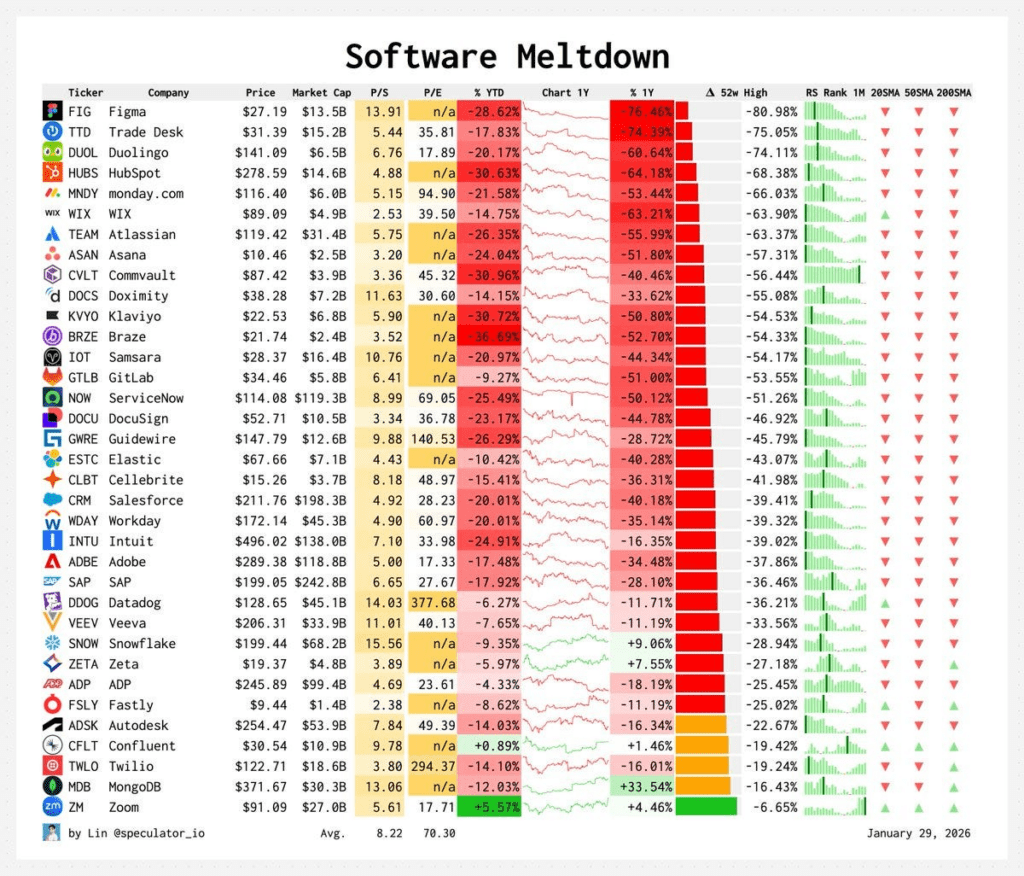
LinkedIn was full of “SaaS is dead” posts at the time. But in my opinion, it is too early to give SaaS the death sentence. Now that we are further into the year, things are becoming clearer.
Starting in April, the SaaS market made a comeback. It started recovering.
However, looking deeper, you can see that some SaaS companies recovered better than others.
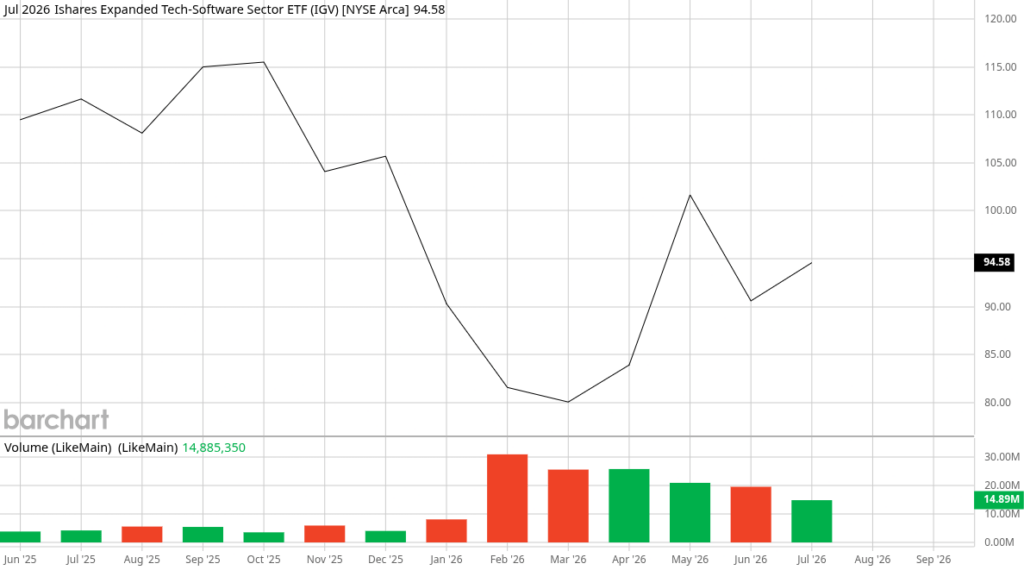
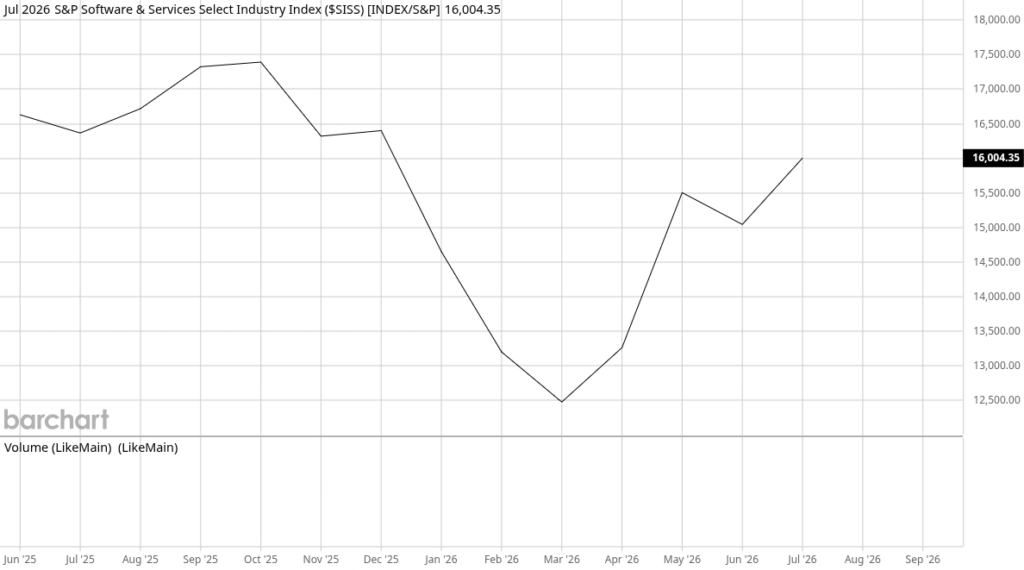
You could see, for example, that big SaaS companies that only focused on facilitating collaboration, or that provided processes which are easy to automate, did not recover as well as SaaS companies focused on “helping organizations operate complex business processes, such as managing supply chains, developing fast-growing new products and delivering excellent customer service” (See Forbes: SaaSpocalypse Now? AI Is Disrupting SaaS — But Not All Software Is Doomed).
Types of SaaS that I would build today
With what we have learned as a market over the past period, and the patterns we are seeing, I believe SaaS is still a great business model to run.
If I wanted to build a SaaS application, these are the types I would go for:
Very cheap, micro SaaS
The first and easiest category is the super small, use-case-specific, cheap SaaS: a tool that is not worth vibe coding yourself and maintaining afterwards.
Run this on volume and strong SEO and you can milk this model. Just find a very specific use case, preferably one you often carry out yourself so you know exactly how to tackle it, vibe code something, host it, and sell it for a couple of dollars a month.
The financial app works only because you have no cost per acquisition, to acquire new customers. And also because you are not maintaining a complete tool for just one party, but for multiple at once.
Think, for example, of a calendar sync tool that syncs between a freelancer’s calendar and the calendar of the corporate he works for. For a couple of bucks, taking a subscription is worth it.
The micro SaaS model also has many upsell possibilities. Think of services or add-ons you can sell on top.
Vertical SaaS
The second interesting one is the SaaS model where you provide a system for a super narrow target audience. You give them a solution that feels tailor-made, aligned with their exact needs and the way they operate.
This model works well for corporates, of course, but even better for businesses that don’t use much automation yet. In the past, it was hard to sell these types of companies anything that had to do with digitalisation. But now they all know that they need to adapt, because they have heard of AI too.
Think, for example, of a SaaS that helps construction companies screen candidates for specialist roles properly.
AI infrastructure SaaS
Sell shovels while everyone digs for gold. Every other SaaS company is trying to enhance itself with AI. So what if you provide the infrastructure for that AI?
VCs are rewarding these types of startups, and if hardware is involved, that is a plus. Go and try to vibe code hardware. Quite a challenge.
Besides, there is a natural lock-in in this specific type of business. How often would you switch your AI infrastructure?
Agentic software run for you
A very interesting business model is providing an agentic approach, done for you.
Because running and managing agents takes time, people outsource it.
So you sell the outcome. The client gets a membership to software that you partly operate. They see the dashboards, they set the goals and the boundaries, and they approve the things that need approval. You handle everything else.
Think about an agentic solution for plumbing companies. It handles their inbound calls and messages. The agent picks up every lead, qualifies it, and books it in the calendar.
You (and your team, if you have one) answer the agent’s questions and handle the exceptions.
The client logs into the application and sees the scheduled meetings and other information, like response times, lost leads, and the statistics.
SaaS tied to an offline factor
The next one is the SaaS with an offline factor. Not my favourite, because the cost model is not a typical SaaS one.
The software plus service model is part of this one, but this one is broader. You don’t build an agency here, you find any way to provide offline value.
Think, for example, of providing a network of service suppliers, like Odoo does. It provides the SaaS and a partner network.
Another type of offline factor is a device. Think of a smarter type of automated gate, or a useful niche gadget. But then you need to manage your COGS well.
SaaS built on unique data
My own favourite is the data moat. If you can work in a vertical where you have, or can collect, unique data, and you can leverage that data for your customer using prediction models, then you are providing something unique and difficult to copy.
Another one that has to do with data is the data as a service model, which is becoming increasingly popular. If you can harvest data that is relevant for a certain industry or vertical, you can sell access to it.
What matters in both cases is that the data is really hard to obtain otherwise.
SaaS with access to a channel or partner competitors can’t get into
Distribution is king. And key distribution channels or partners that are difficult for competitors to access are a moat on their own.
Let’s say Elon Musk is your neighbour and he is interested in using the media player you have built. That is distribution knocking on your door.
Luckily, that is not the only way to pull this off. It can be engineered too. Think about corporate venture building, for example, where you collaborate with a corporate to build a tool for them in a joint venture: part of the deal would be that the corporate itself could become a client or would promote it to their own client base.
SaaS in a regulated market
A regulated market is a market that is difficult to access. Guess what? It is also difficult to access for your competitors. So if you are in, it is harder to compete with you.
This business model only works if you have experience with regulations and like to play that game, though. It is not for everybody, and definitely not for me 😉
Also execution changed
If you look at all 8 types, you might notice that they have one thing in common. It’s that they don’t rely on the software part alone. Each of them has another lock-in reason for the customer to choose you and stay with you. I wrote more about why this matters specifically for AI startups in Most AI startups don’t own their own product.
Code is not the hard part anymore. At least, that is what we are predicting as a market (it is still hard). Within a few years, everybody will be able to build an application using human language. What you want is to give them a reason to stay with you beyond the fact that building it is expensive, because it won’t be anymore.
However, you are not automatically safe if you pick a category from this list. Many have picked the wrong one at the start. The trick is to fail fast and switch before it costs you too much.
That part, how you would actually run this today, is the next article.