Companies build custom software because an off-the-shelf package does not fit the way they work. Custom software follows your process, grows with you and belongs to you, but it also takes more preparation and a good partner.
Below you will read why companies choose custom software, when off-the-shelf software is the better choice and which trade-offs come with it. Want to know what the process looks like? Read getting software developed: what it is, when and how.
Why do companies choose to build custom software?
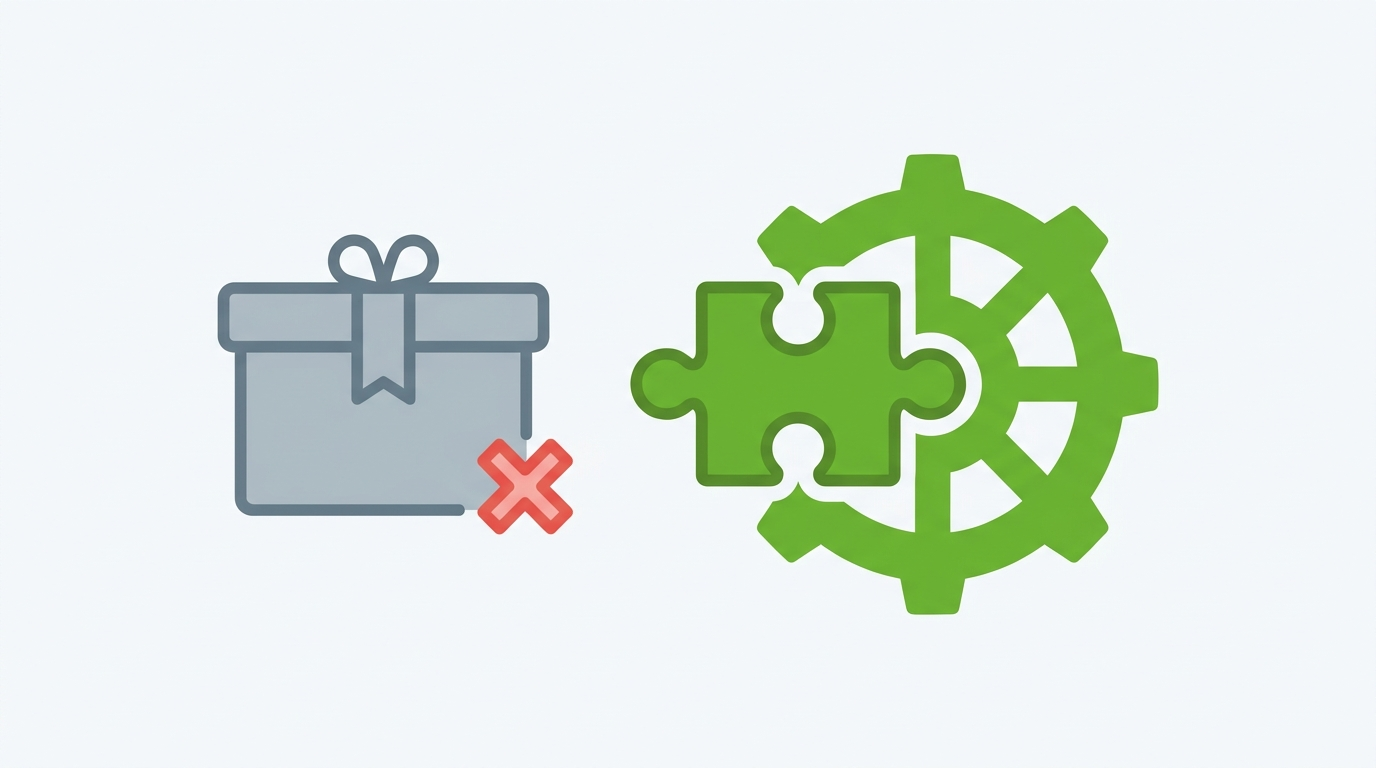
Because off-the-shelf software is built for the average user, not for your specific processes. Once you rely on workarounds, spreadsheets next to your system or features you never use but still pay for, custom software becomes worth considering.
The main reasons:
- A fit with your process, instead of bending your process around the software.
- Scales with your business, without per-user license costs that grow out of proportion.
- Ownership: the software is yours, not dependent on an outside vendor who shuts down or raises prices.
- Competitive advantage: a unique process cannot be copied with the same SaaS tool your competitor uses.
When is off-the-shelf software the better choice?
For a generic problem, such as accounting or email marketing, off-the-shelf software is usually the better choice. Good software already exists for it and you do not have to build anything.
Custom software becomes the logical choice once your process is unique enough, you work with several systems that do not cooperate well, or you notice your business has started to work around the software instead of the other way around.
You see it most in your team. When employees have to bend their work in unnatural ways to fit the fixed structure of a package, the limit has been reached. Generic software stays generic, and a system you use every day should not cost your people extra time and effort.
Which trade-offs come with custom software?
Custom software is not a free upgrade from a package. These are the trade-offs you make:
- A higher upfront investment, which can pay back over time because you do not pay for features you do not use.
- Your own input: you decide what the software needs to do, and a team turns that into a working solution.
- Maintenance and fast response: software keeps needing updates, security and support. If your main process runs on your own software, a bug in it has to be fixed extremely fast. Agree response times up front in an SLA (service level agreement).
- Starting small: a first version (MVP) that solves the most important problem limits the risk.
What this means in euros is covered in what custom software development costs.
Why does building software take longer than you expect?
Because most of the time goes into understanding, learning and planning, not into writing the code. You first have to grasp how the work really flows, then find out what users need, and then plan what to build in which order.
Clients regularly ask us why a project takes three months, for example. AI has made coding faster and can show a proof of concept within a short time, so the time needed for solid software gets underestimated. A PoC shows that something is possible, not that it works well.
What does AI change about buying or building?
The price, not the rule. Still buy where a package fits, but be open to building when it does not.
AI has made building cheaper. In our experience, a tool that used to cost around €100,000 now costs about €20,000, which makes custom software worth considering more often.
How such a project runs, from first conversation to launch, is on getting software developed. Does it fit your business? See our approach on software development.
Frequently asked questions
Is custom software more expensive than off-the-shelf software?
The upfront cost is usually higher, but custom software can work out cheaper over the long run. You’re not paying for features you don’t use, and there are no growing per-user license costs.
What is the difference between building software in-house and using a development partner?
Building in-house means hiring and managing your own development team. With a partner like Wise Minds, an experienced team builds it for you, without the overhead of hiring your own engineers.
When is off-the-shelf software enough?
When your process does not differ from what the package does and you use most of its features. For generic tasks such as accounting or email marketing, that is usually the case.
What are the downsides of custom software?
A higher upfront investment, the need to define what the software must do in advance, and maintenance after launch. Starting with a small first version limits the risk.
Can I start with just a small part of my software?
Yes, and we often recommend it. Start with a small version (an MVP) that solves the most important problem, then expand step by step based on what you learn.
What is an SLA for custom software?
An SLA (service level agreement) sets out how quickly a supplier responds to and resolves problems, for example a bug in a critical process. It also covers availability and maintenance.
Still deciding whether custom software fits your business? Get in touch and we’ll help you think it through, no strings attached.