“Product operating model” gets thrown around a lot, but it describes something specific: how a company organizes itself to build products, not just ship features.
Popularized by Marty Cagan (Silicon Valley Product Group), it’s become the standard vocabulary for what separates strong product companies from ones that simply have developers on staff.
What is a product operating model?
It’s the operating structure behind how a company decides what to build, who decides it, and how those decisions actually get made.
It’s not a process framework on its own, and it’s not just an org chart. It’s the combination of team structure, decision rights and ways of working that determines whether a company consistently builds the right things.
The core principles
Empowered product teams, not feature teams
A feature team takes a spec and builds it. An empowered team is given a problem to solve and the latitude to figure out the best solution, informed by direct access to customers and data.
Outcomes over output
Success isn’t “we shipped ten features this quarter.” It’s whether those features actually moved a metric the business cared about.
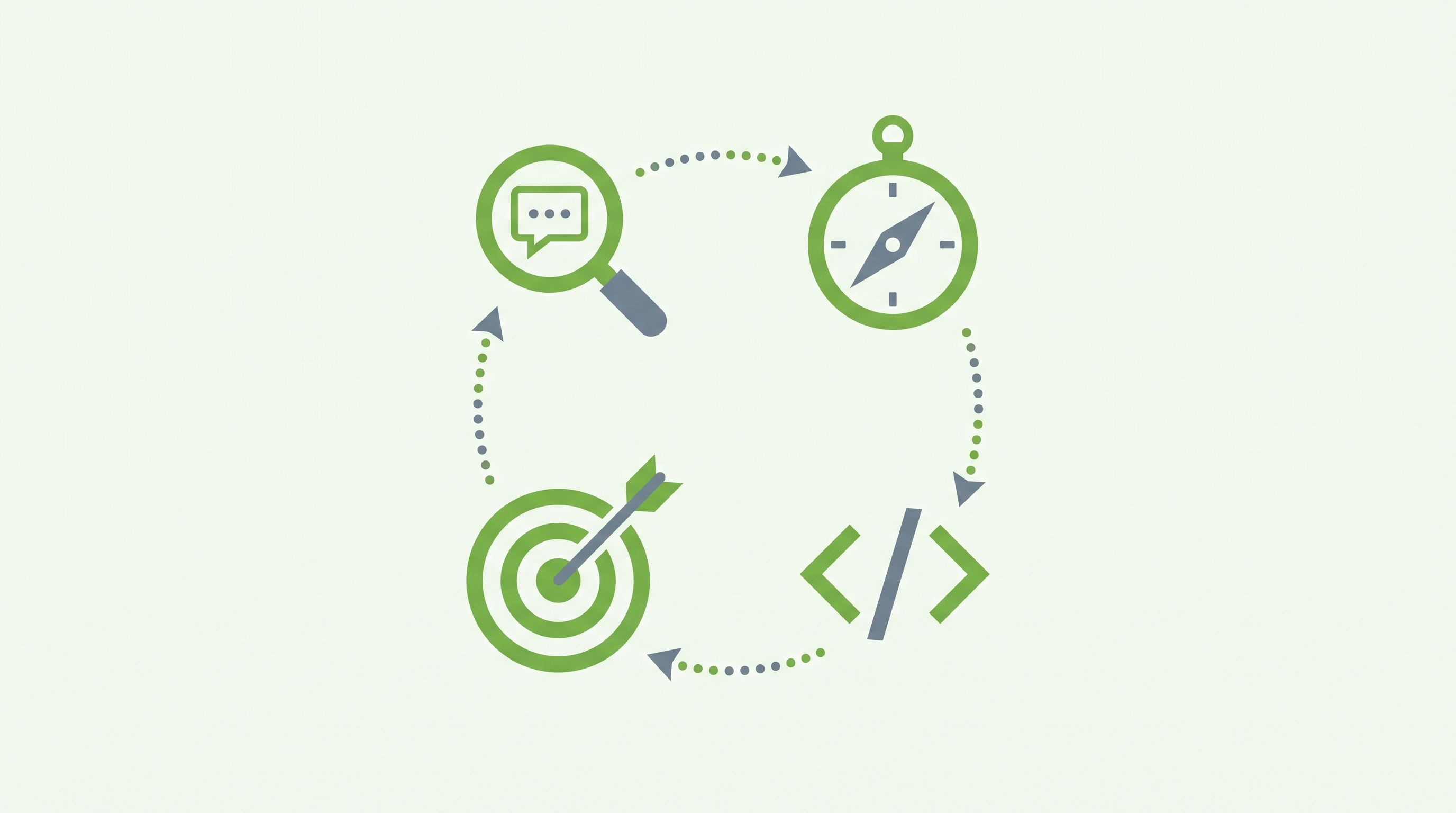
Continuous access to users and data
Teams that own outcomes need a steady stream of real user contact and usage data, not a single research phase at the start of a project.
Strategy that guides, not micromanages
Leadership sets the “why” and the boundaries. Teams work out the “how,” rather than waiting to be told exactly what to build next.
Why most companies still don’t run this way
Old habits are hard to shake: roadmaps driven by whoever asked loudest, no one with real authority over product decisions, and “add developers” treated as the whole answer to a delivery problem.
None of that is a developer-skill problem. It’s a structure problem, and structure is exactly what a product operating model addresses.
What this looks like in practice at Wise Minds
Every Wise Minds product unit is built around this model from day one: developers and product leadership working together with real decision rights, not a queue of tickets handed down from a client’s backlog. See how the roles fit together for the full breakdown.
If you already have developers and want the operating model without a full new hire, see staff augmentation. If you’re building a team from scratch, see hiring a development team.
Frequently asked questions
Is the product operating model just Agile with a different name?
No. Agile describes how software gets built, in sprints or iterations. A product operating model describes who decides what gets built and why. You can run Agile ceremonies without empowered product teams, and empowered teams don’t require any specific Agile framework.
Do we need a Chief Product Officer to run this model?
Not necessarily, at least not at first. What matters is that someone holds real authority over product decisions, whatever their title, rather than that authority being split across sales, engineering leads and whoever raised the last request.
Can a small team actually run a product operating model?
Yes, often more easily than a large one. The core requirement is decision rights and direct access to users and data, not headcount. A small empowered team can outperform a much larger team of feature-takers.
How is this different from just having a good product manager?
A strong product manager helps, but the model is bigger than one role. It needs the whole team empowered to make decisions, not just one person who’s well informed while everyone else executes a spec.